
How to Develop a Resilience Hub
The Resource Hub
Creating a Resilience Hub is a community-driven process that involves continuous input, feedback, and redesign. No two Resilience Hubs are exactly alike. Thus, information on this page is intended to guide and support Hub development while also encouraging adaptability, flexibility, and fun. This page provides a basic breakdown of the key stages of Resilience Hub development alongside a series of resources including informational documents, guidance and support documents, and stories from various Hubs across North America.
Resources
Open Resources (free for all)
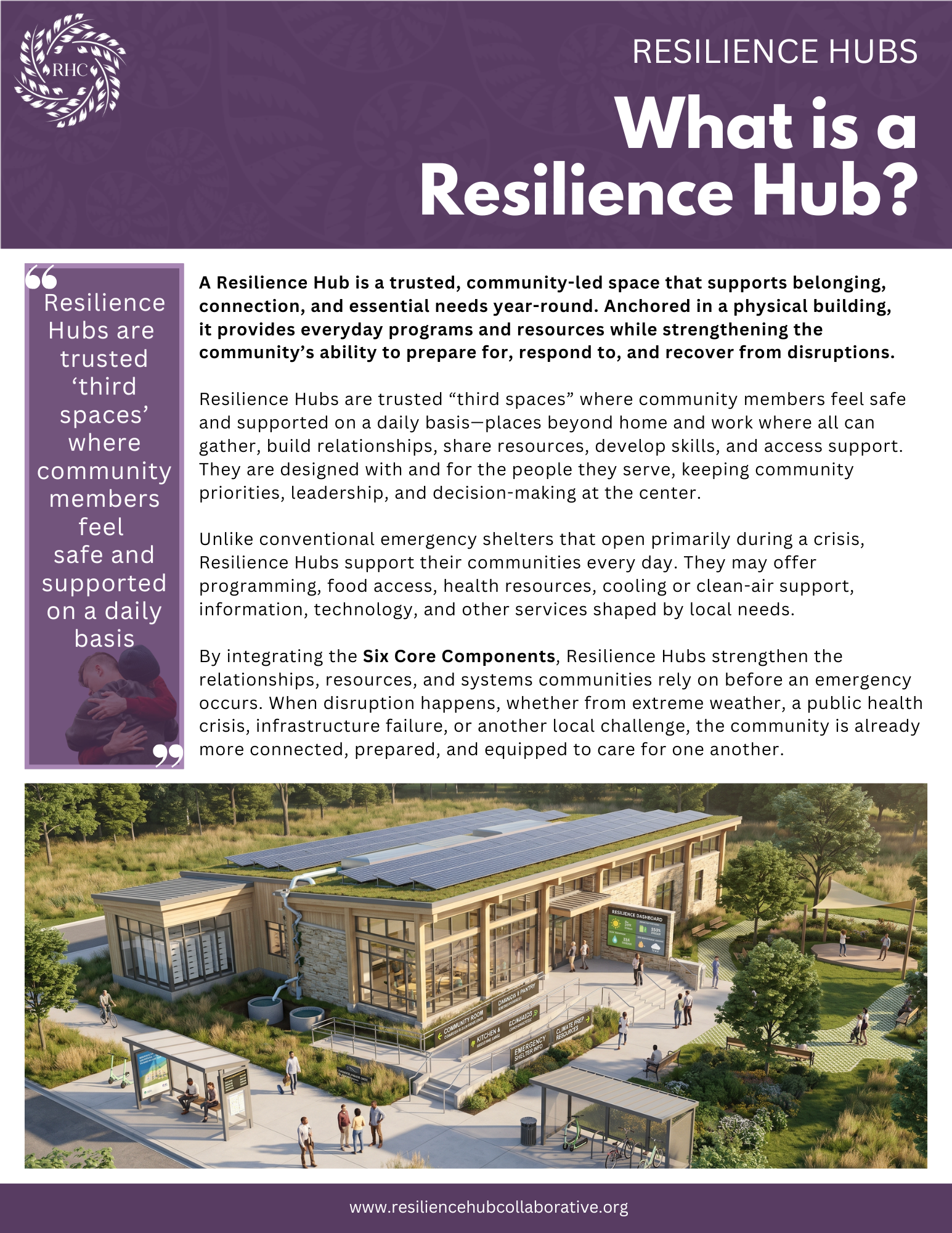
What is a Resilience Hub?
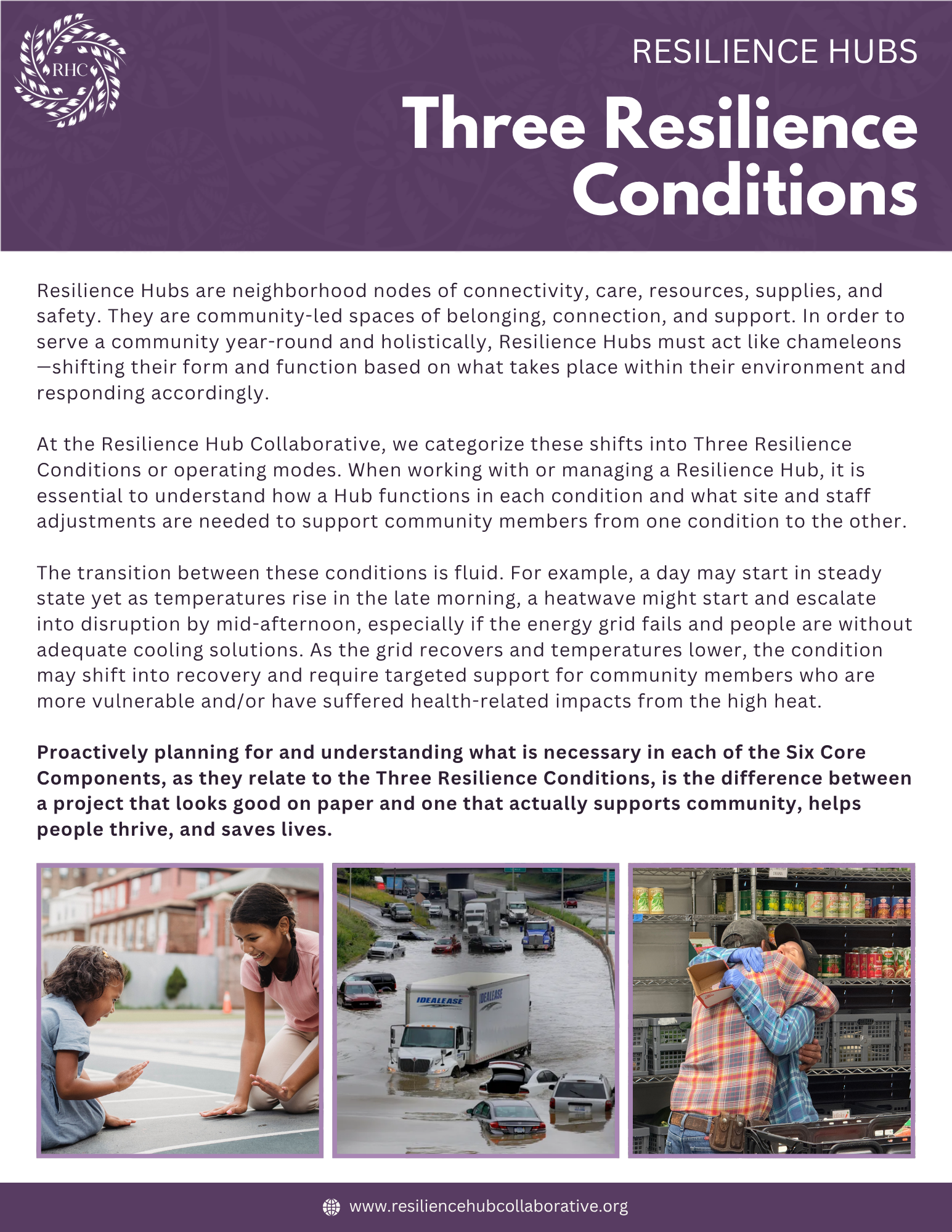
Three Resilience Conditions
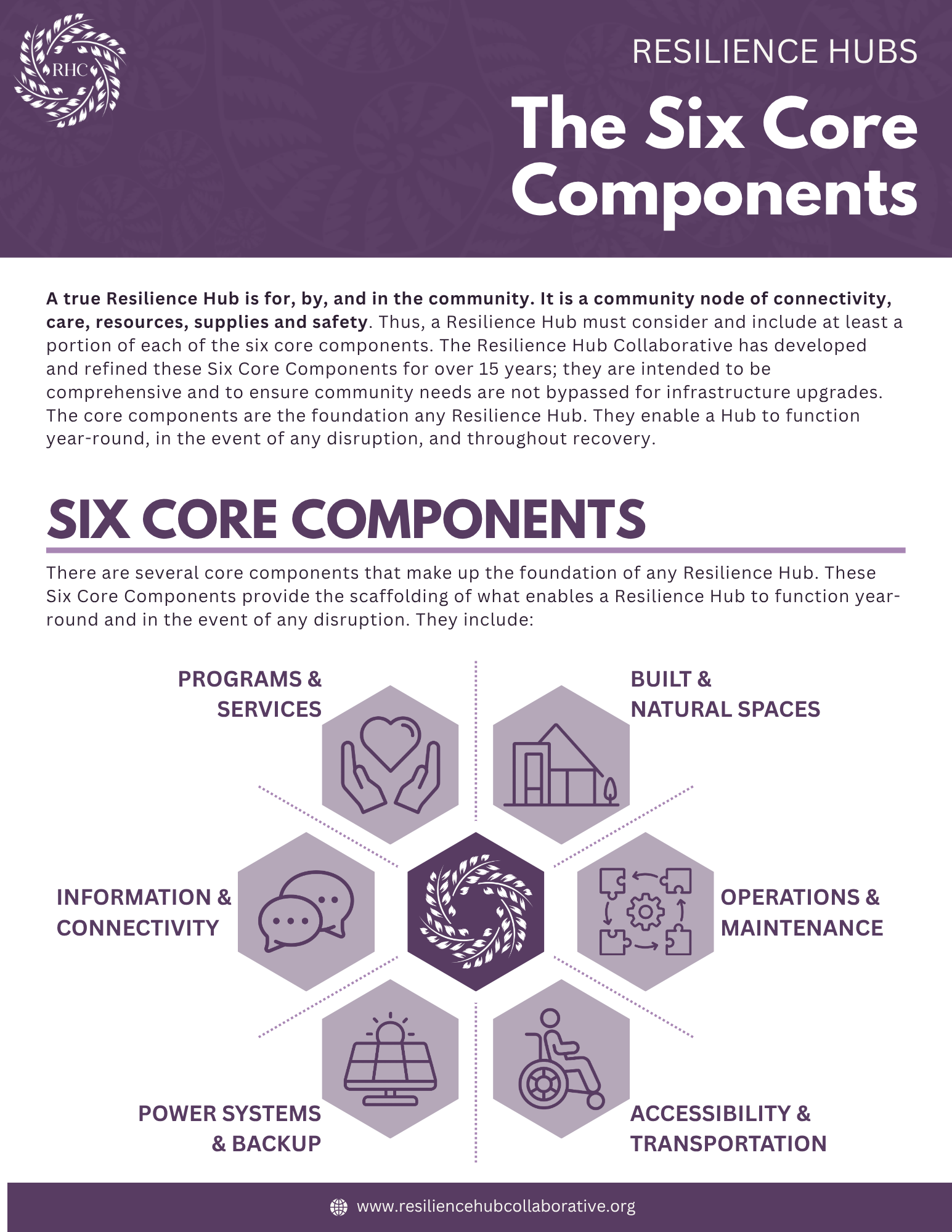
The Six Core Components
Resilience Defined

Program & Services
Information
& Connectivity
Power Systems
& Backup
Built
& Natural Spaces
Accessibility &
Transportation
Operations &
Maintenance
The Process
-
Identify the area/neighborhood/community to be served by the Resilience Hub
Develop a wise council of community leaders and stakeholders
Take time to build trust, compassion, and empathy amongst stakeholders
Assess your community's needs and existing resources
Familiarize yourself with the core components of Resilience Hubs
-
Utilize assessment tools to evaluate potential Hub locations
Access RHC’s curated collection of guides, templates, and best practices
Access RHC’s support services and technical assistance (optional)
Leverage grant writing support and funding resources
-
Involve community members (in identified area) in participatory planning processes
Define the specific services and programs the Resilience Hub will offer
Develop partnerships with local organizations, businesses, and government agencies
Build out phasing for Hub design and implementation
-
Incorporate the six core components ( 1. Programs & Services; 2. Information & Connectivity; 3. Built & Natural Spaces; 4. Power Systems & Backup; 5. Accessibility & Transportation and 6. Operations & Maintenance) into your Hub design and ensure the Hub reflects the community’s unique culture and needs
Collaborate with consultants, architects, designers, installers and partners familiar with Hub concepts
-
Secure funding through grants, partnerships, government support, donations, or community fundraising
Begin phased implementation, starting with first priorities identified by community and critical components
Develop Hub operations and emergency protocols and train all staff and volunteers
-
Document your Hub's development process
Share your experiences and lessons learned with the RHC community
Inspire and guide other communities in their Resilience Hub journeys
One-on-one and team coaching
Technical assistance
Monthly virtual learning sessions on specific topics
Regional meetings for localized support
Access to a network of experienced Hub developers and community leaders
Throughout this process, the Resilience Hub Collaborative offers support with:
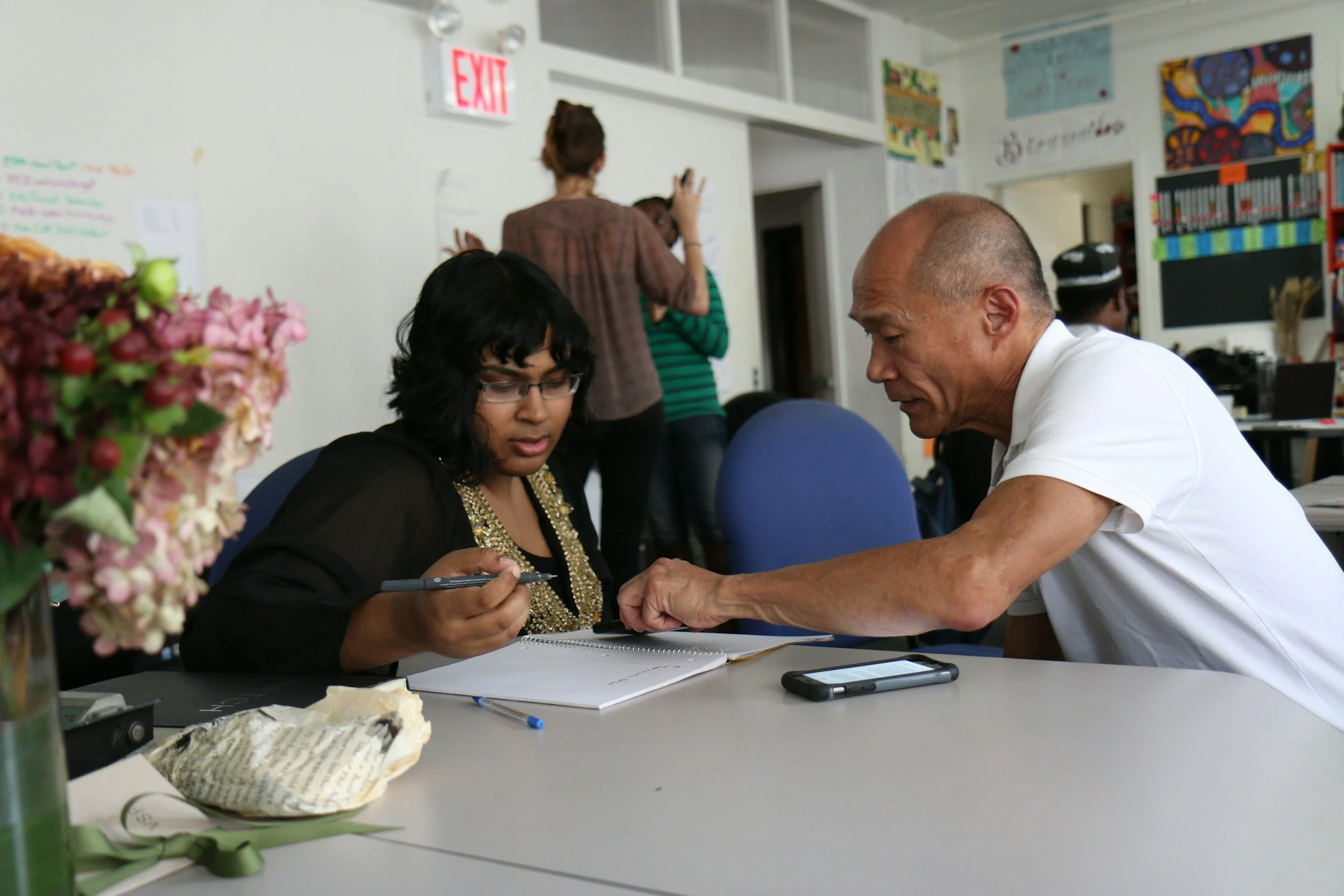


Each Resilience Hub is unique to the community it serves
This process is flexible and can be adapted to fit your specific context and needs.
For more detailed guidance or to request specific support, please contact us or join the Resilience Hub Collaborative by clicking below